Disclaimer
This content is provided for informational and educational purposes only and does not constitute financial, investment, or trading advice. Cryptocurrency investments are highly volatile and involve the risk of losing part or all of your capital. Always conduct your own research (DYOR) and invest according to your financial situation and risk tolerance.
Introduction – A Structured Approach to Cryptocurrency Trading
The cryptocurrency market is characterized by high volatility. Prices can rise or fall significantly within a short period of time, making emotional decisions one of the greatest risks for investors and traders.
For this reason, I follow a structured trading strategy based on discipline, predefined rules, and systematic capital and profit management.
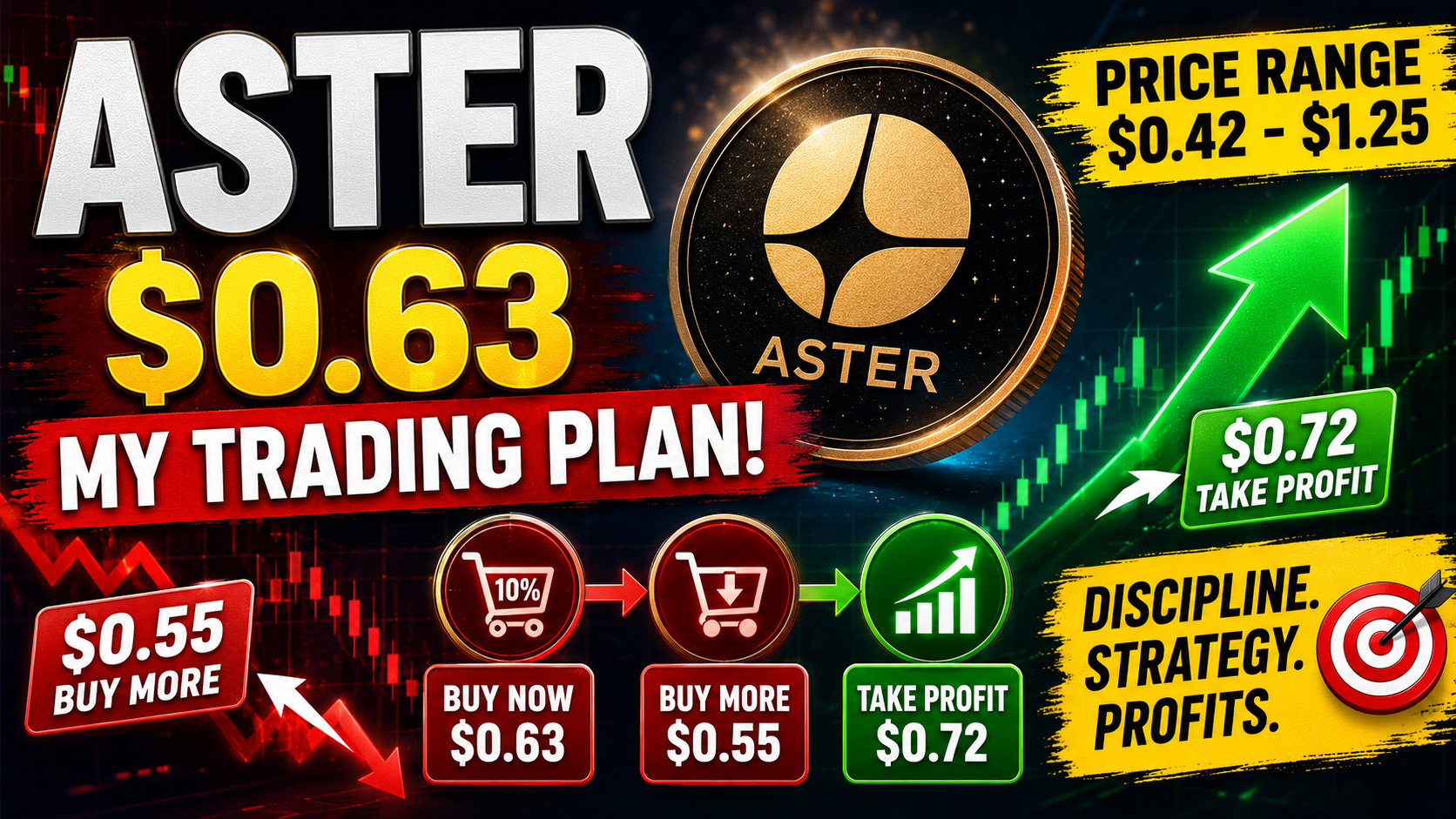
Currently, Aster is trading within a price range of $0.42 to $1.25. At the time of writing, the price is approximately $0.63.
My Position-Building Strategy
At a price of $0.63, I purchased Aster using 10% of the capital allocated specifically for building a position in this cryptocurrency.
Bearish Scenario
If the price of Aster declines to $0.55, I will purchase additional Aster using another 10% of the capital allocated to this asset.
Bullish Scenario
If the price of Aster rises to $0.72, I will take partial profits by selling an amount equal to 10% of the profit generated from this position. The realized profit will then be allocated according to the rules of my trading system.
Important Information
To fully understand my TheAbrahamCryptoLand investment strategy, it is recommended to follow all related content in chronological order, starting with the oldest videos or posts about Aster.
Some publications may appear similar, but they often contain important updates regarding:
- Current cryptocurrency price levels
- Updated price ranges
Understanding the TheAbrahamCryptoLand strategy requires following the entire investment process rather than viewing individual updates in isolation.
The cryptocurrency market is dynamic, and price levels, buying zones, and profit-taking targets may change over time as market conditions evolve.
Leave a Reply